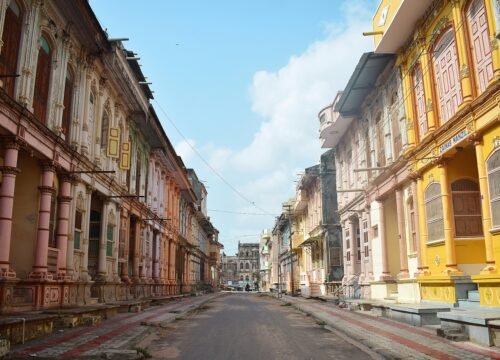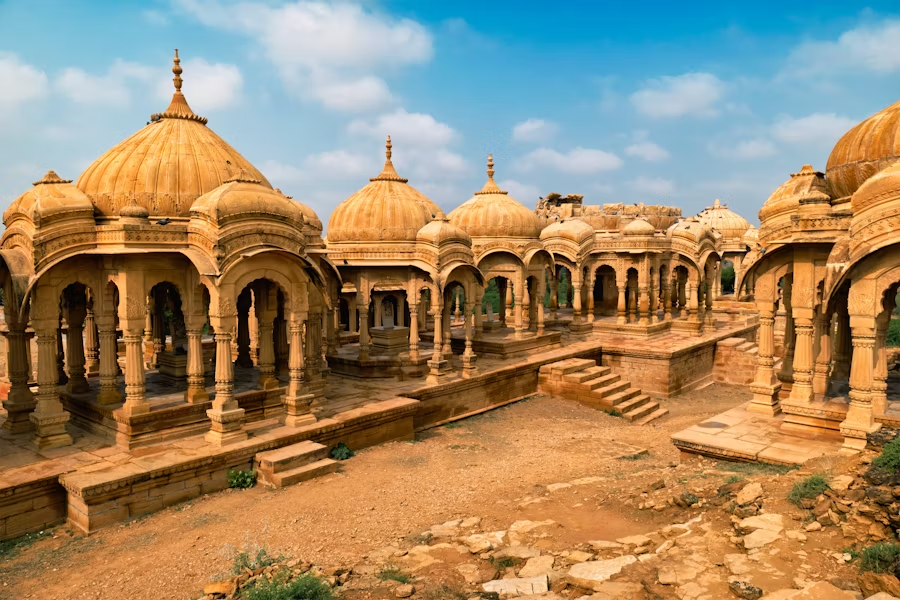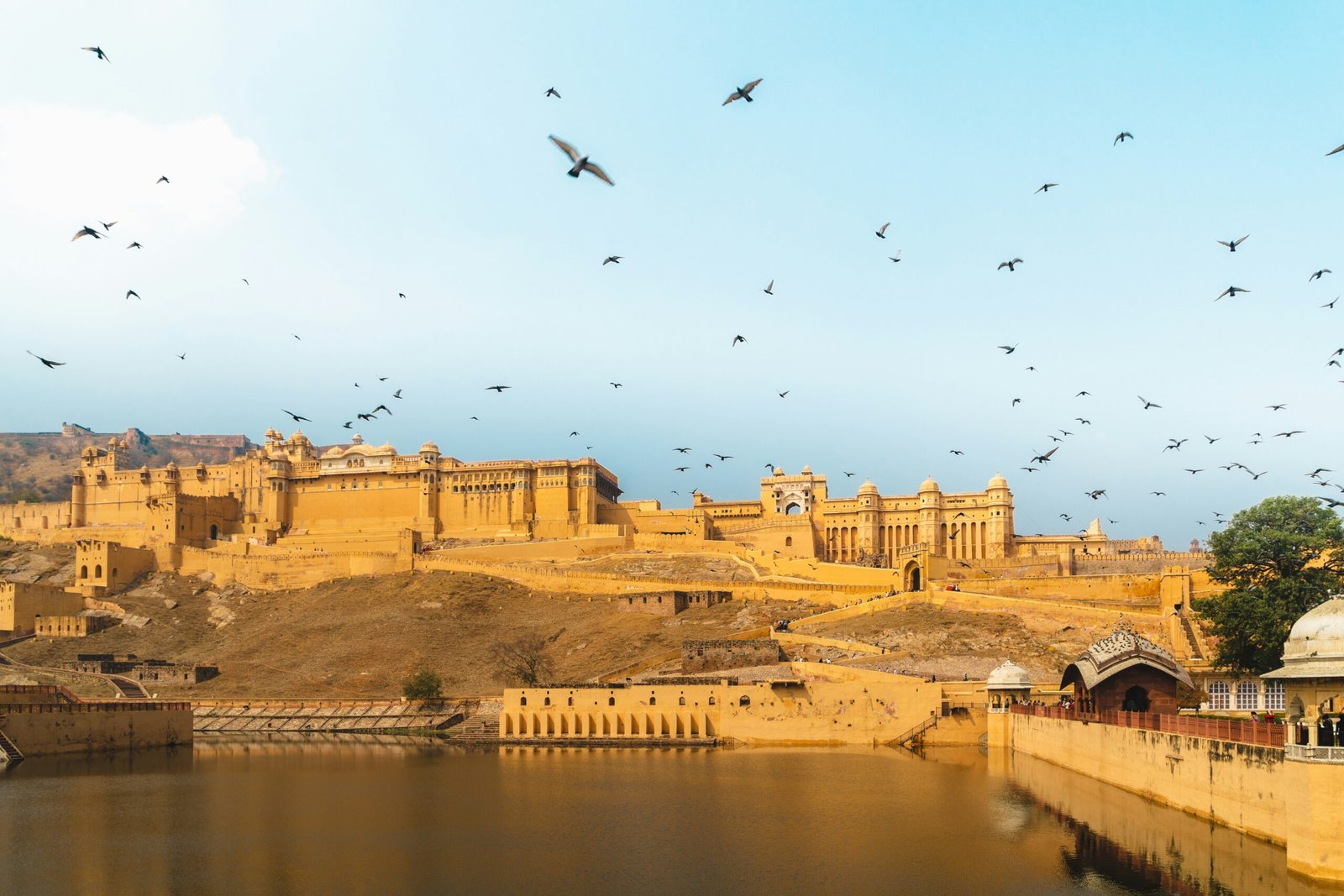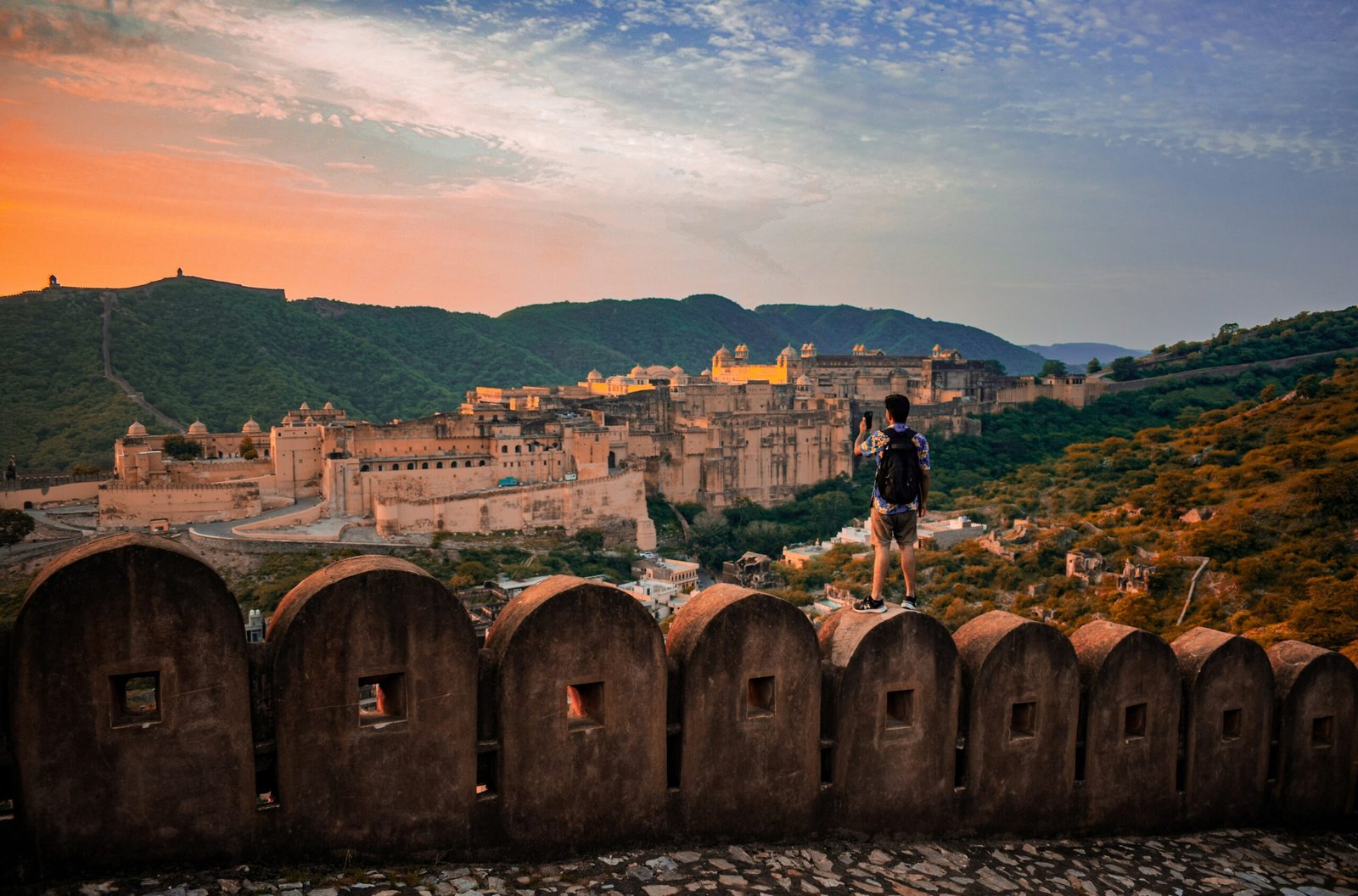
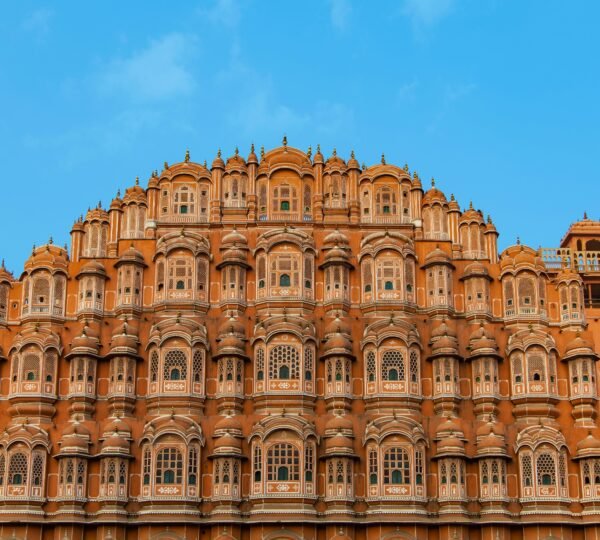
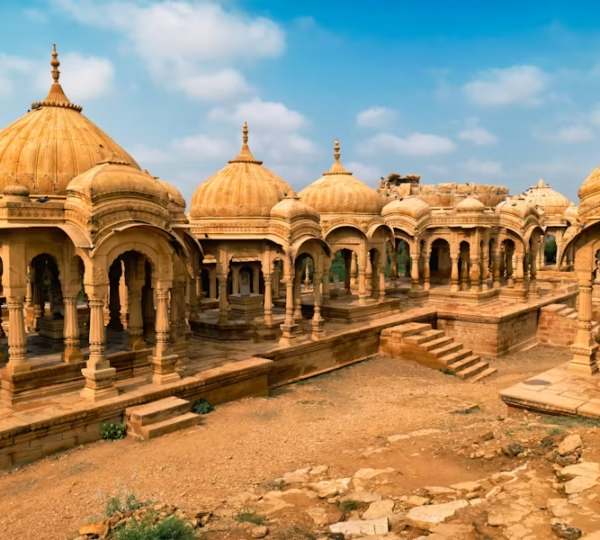
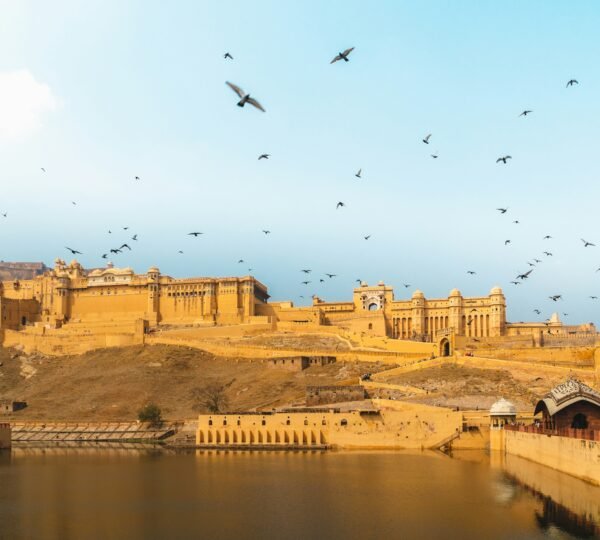
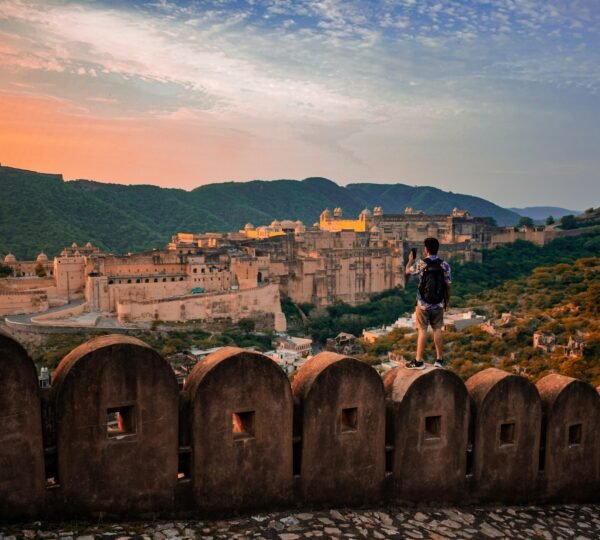
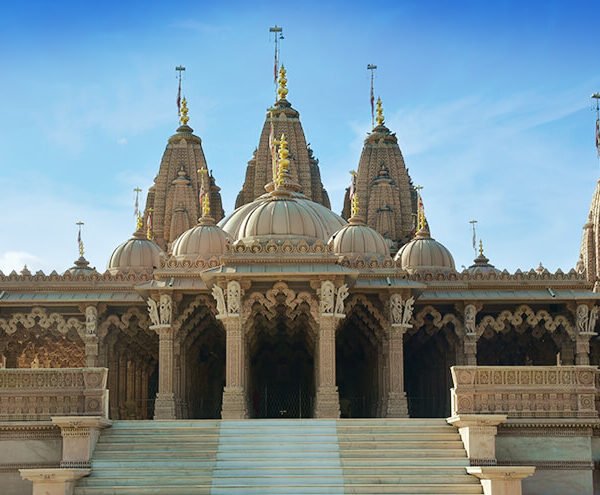
Embark on a spiritually enriching and culturally vibrant journey with the Rajasthan & Gujarat Pilgrimage Tour, where divine devotion meets royal heritage. This sacred expedition takes you through some of India’s most revered temples, holy shrines, and ancient cities — offering a perfect blend of faith, peace, and history across two magnificent states. Begin your journey in Jaipur, the royal Pink City of Rajasthan. Visit the serene Govind Dev Ji Temple, dedicated to Lord Krishna, located within the City Palace complex. Explore the majestic Birla Mandir, a marble masterpiece that glows beautifully at sunset, and experience the spiritual calm of Moti Dungri Ganesh Temple, one of Jaipur’s most beloved shrines. Alongside its divine charm, Jaipur dazzles visitors with its architectural marvels like Amber Fort, Hawa Mahal, and City Palace, all echoing tales of Rajasthan’s regal past.
1N Jaipur •1N Pushkar •2N Udaipur •1N Mount Abu •1N Ahmedabad•2N Dwarka•1N Somnath•1N Ahmedabad•2N Vadodar
Tour Plan
Day 2 - Jaipur to Pushkar
Sightseeing in Jaipur to Pushkar
City Palace :Located in the heart of the Pink City of Jaipur, City Palace is a combination of Rajasthani and Mughal architecture. Maharaja Sawai Singh built the outer walls of the palace between 1729 and 1732 and the successive rulers enlarged the monument into a beautiful palace. The Palace Complex is endowed with sprawling courtyards, beautiful gardens, museums, and art galleries. There are three entrances to the palace; Virendra Pol, Udai Pol, and Tripolia Gate. Do not miss Chandra Mahal and Mubarak Mahal once you are here. Since the complex has many structures to visit, therefore it is advised to wear comfortable shoes. The palace, one of the most famous landmarks of Jaipur, still houses the last ruling family of the former kingdom in a private section.
Jantar Mantar :Jantar Mantar is the largest stone astronomical observatory in the world and is located right next to the famous City Palace in Jaipur. The word 'Jantar' in Hindi means instrument and the word 'Mantar' means calculation, hence, Jantar Mantar means a calculation instrument. The observatory was built in 1734 by Rajput King Sawai Jai Singh II who was also an avid astronomer. The intriguing architecture of Jantar Mantar has 19 instruments built from stone, marble, and brass. The instruments allow one to calculate the position of heavenly bodies, measure time, track stars and to predict eclipses with naked eyes.
Dargah Sharif :Dargah Sharif is Ajmer's most famous tourist attraction. The dargah was built by the Mughal King Humayun in honor of a Sufi saint, Khwaja Moinuddin Chishti. The entrance of the dargah is lined with beautiful silver doors leading to the courtyard where a tomb of Moinuddin Chisti is carved out of marble with a gold plating on the top. This architectural marvel also has other mosques which were built by Shah Jahan. Visitors are suggested to dress modestly on their visit to this dargah.
Day 3 – Pushkar to Udaipur
Sightseeing in Pushkar and Udaipur
Brahma Temple :Devoted to the lord of creation, Lord Brahma, the Brahmaji temple is one of the oldest temples located close to the Pushkar Lake. According to the legend, the origin of the temple took place around 2000 years ago when Brahma was cursed by his wife Savitri for performing a yajna with another woman as his consort. She allowed him to be worshipped only in Pushkar and nowhere else. The temple is constructed with marble and features a Southern style architecture. The entrance is decorated with pillared canopies and the statue of Lord Brahma is placed inside the temple along with the images of Lord Vishnu, Garuda, and Dvarapalas. While visiting the temple devotees are suggested to dress modestly.
Bagore Ki Haveli :Bagore ki Haveli is situated beside the magnificent Lake Pichola at Gangotri Ghat. The Palace is an 18th-century masterpiece which has more than a hundred rooms and exhibits a wide collection of Mewar paintings, glasswork, traditional costumes and old musical instruments. The queen's chamber is the most fascinating room, decorated with exquisite mirrors and glasswork. During the evenings, the Haveli also hosts a ticketed musical evening where one can enjoy folk dances and traditional cultural performances.
Pushkar Lake :Situated amidst the Aravali Hills in Pushkar, the Pushkar Lake is one of the most sacred spots in Rajasthan. According to Hindu mythology, the lake was created when a lotus fell from the hands of Lord Brahma during his battle with Vajranabha. The magnificent lake is surrounded by numerous temples and ghats. One of the most important temples is the Brahma temple which is 2000 years old. A major attraction here is the Pushkar Fair which lures visitors from all over the world. It is held in the month of Kartik (October/November) every year and is famous as the largest camel fair in Asia. Since Pushkar is considered a sacred town, meat, eggs, and liquor are not allowed here and smoking is prohibited by law. Also, visitors are suggested to dress modestly and enter the lake barefoot.
Day 4 – Udaipur
Sightseeing in Udaipur and Jaipur
Nathdwara :Located 48 kilometers north-east of Udaipur, Nathdwara is a quaint town situated on the banks of the Banas River. The town is famous for being home to the highly revered Shrinathji Temple, one of the most important temples in India dedicated to Lord Krishna. Nathdwara is visited by thousands of devotees every year, especially during the festivals of Janamashtami and Holi. The town is also famous for the intricate Pichwai paintings.
Kankroli Temple :The small town of Kankroli is famous for its Dwarkadhish temple (another name of Lord Krishna). Located 65 km away from the main city of Udaipur on the banks of Rajsamand Lake, Kankroli is visited by devotees from all over India . The principal idol is claimed to have been imported from Mathura, the hometown of Lord Krishna, in the 1671 AD. The temple is considered a significant part of the Vaishnavas and Vallabhacharya sect. The serene and tranquil ambiance of the town infused with the picturesque view of the Rajsamand Lake will add more to the experience of the visitors.
Eklingji Temple :Located 22 km away from the main city of Udaipur, Eklingji temple is an ancient temple situated in the town of Eklingji. This Hindu temple is dedicated to Eklingji, one of the famous forms of Lord Shiva, and was built in 734 A.D. by Bappa Rawal. The double storied temple features a pyramid style roof and an intricately carved tower. The temple is home to a 50 feet tall four-faced idol of Lord Shiva crafted from black marble. The Shivalinga is garlanded with a silver snake which is the prime highlight of the temple. The temple has other small shrines as well and is a very popular place of visit. It is suggested to dress modestly while visiting.
City Palace :Located in the heart of the Pink City of Jaipur, City Palace is a combination of Rajasthani and Mughal architecture. Maharaja Sawai Singh built the outer walls of the palace between 1729 and 1732 and the successive rulers enlarged the monument into a beautiful palace. The Palace Complex is endowed with sprawling courtyards, beautiful gardens, museums, and art galleries. There are three entrances to the palace; Virendra Pol, Udai Pol, and Tripolia Gate. Do not miss Chandra Mahal and Mubarak Mahal once you are here. Since the complex has many structures to visit, therefore it is advised to wear comfortable shoes. The palace, one of the most famous landmarks of Jaipur, still houses the last ruling family of the former kingdom in a private section.
Day 5 – Udaipur to Mount Abu
Sightseeing in Udaipur and Mount Abu
Ranakpur Jain Temples :Dedicated to Tirthankara Rishabhanatha, Ranakpur Jain Temple (also known as Chatarmukh Temple) is one of the oldest Jain Temple and holds immense significance for the Jains. The temples are situated around 2 hours drive away from the main city of Udaipur. The construction of the temple started in the year 1446 and it took 50 years for its completion. What makes its architecture unique is the chaumukha structure-meaning it has 4 faces. An interesting fact about the structure is that it has uncountable pillars and each one of them different from the other. Please note, leather products are not allowed inside temple. Devotees as requested to wear modest attires while visiting the temple.
Dilwara Jain Temples :Dilwara temples, the most famous Jain temples in India, are located just on the outskirts of Mount Abu, amidst the forested hills. They are a cluster of five temples, all dating between the 11th and 13th centuries, of which the Shri Parshvanath Temple has the tallest shrine. The temples are known for their intricate marble carving. The architecture of these temples is so beautiful and enthralling that some people consider it superior to that of the Taj Mahal. The carved ceilings, doorways, pillars and panels are all packed with artistic mastery. While visiting please note that electronic items are not allowed inside the temple.
Nakki Lake :The beautiful Nakki Lake, popularly known as Nakki Jheel, is widely accepted as the first man-made lake in India. Situated amidst the Aravali hills of Mount Abu, it is a delight for nature lovers and a popular sightseeing point for visitors to this hill station. Some of Mahatma Gandhi’s ashes were immersed in this lake in 1948 and Gandhi Ghat was constructed here to mark that point. The walk from here to Toad’s Rock is a popular one if you enjoy walking.
Sunset Point :While visiting Mount Abu and Nakki Lake, the Sunset Point cannot be missed as it adds the perfect finishing touch to a great day out in nature’s paradise. It is situated towards the south-west direction of the lake. The charming sunset view from here attracts a lot of visitors in the evening, but don’t let that dishearten you. You will be rewarded for your visit with some amazing photo opportunities, and can also opt to take a stroll around to enjoy the perfect serenity of nature. There are also several souvenir shops nearby dealing with toys, trinkets and so on.
Day6- Mount Abu to Ahmedabad
Sightseeing in Ahmedabad
Day7-Ahmedabad to Dwarka
Sightseeing in Ahmedabad
Vaishno Devi Temple :Vaishno Devi temple of Ahmedabad is a replica of the original temple in Jammu and Kashmir. Located on the top of a hill, the temple is sacred to Goddess Vaishno Devi, a manifestation of Goddess Durga. The temple is 50 feet in diameter and houses a hall that can accommodate around 5000 people. Surrounded by a sprawling garden, the temple remains thronged with tourists throughout the year. It is suggested to dress modestly while visiting the temple.
Bala Hanuman Temple
Located in Jamnagar, the Bala Hanuman Temple is a simple structure situated on the south-east corner of Lakhota Lake. The temple is famous for its continuous chanting of "Jai Sri Ram" since 1st August 1964 and the same is recorded in the Guinness Book of World Record. The surrounding atmosphere of the lake adds to the serenity of the temple. Other nearby attractions are Lakhota Fort and Museum.
TIPS:
- The best time to visit is during the migration period when Lakhota Lakes attracts various bird species
Day 8- Dwarka
Sightseeing in Dwarika
Dwarkadhish Temple
Rukmani Temple :The Rukmini Temple is located 2km away from the Shree Dwarkadhish Temple and is dedicated to Rukmini, consort of Lord Krishna. Since Rukmini was an incarnation of Goddess Lakshmi, it is believed that praying to her will invite peace and prosperity into life. It is a standard practice for pilgrims visiting Shree Dwarkadhish Temple to follow this up with a visit to Rukmini Temple for blessings. While the original temple is said to have been constructed nearly 2500 years ago, the current structure was built during the 12th century. The temple's exterior is beautifully carved with human and elephant figures. Since this is a religious site, please dress appropriately for your visit.
Nageshwar Jyotirling Temple
DAY 9-Dwarka to Somnath
Sightseeing in Somnath
Somnath Temple
Shree Somnath Mahadev Temple is the first among the twelve Aadi Jyotirlings in India and is believed to have been constructed originally in the 4th century AD. Located in Prabhas Patan in Gujarat, it is an important pilgrimage site, especially for Shiva devotees. According to ancient Puranic beliefs, the temple was first built in gold by the Moon-god Soma (hence its name), then in silver by the Asura king Ravana, and subsequently in wood by Lord Krishna. It was later rebuilt by the Solanki Rajputs in the 11th century. Between the 11th and 18th centuries, Somnath temple was looted and destroyed by invaders numerous times but was always rebuilt. The present temple was built between 1947 and 1951 at the initiative of Sardar Patel. It is built in the Chalukyan style of architecture with a Shikhara nearly 50m high. The temple is illuminated every evening, and also hosts a Sound and Light show daily. It is the site of a major fair held every year during Kartik Poornima (October/November). Since this is a religious site, please dress appropriately for your visit.
Sudamapuri
The Sudama Puri temple is the birthplace and residence place of Sudama who was the dearest and childhood friend of Lord Krishna. Located in Somnath, the temple was built in reverence of Sudama between 1902 and 1907. Within the main temple, there are idols of Sudama at the center, his wife Srimati Sushila on the right and Lord Krishna on his left. The temple also has a charming garden and a well from where Sudama used to fetch water. There is also a maze within the temple premises, and it is believed that all sins of a person will be forgiven if they cross the maze. The temple is visited by many devotees to offer their prayers to the deities and seek their divine blessings. The beautiful architecture of this temple allures tourists from around the world to visit this attraction
Bhalka Tirtha
Located in the northern part of Somnath, Bhalka Tirtha is the place of the temple of Lord Krishna. It is believed that the site of the temple is the place where Lord Krishna was mistakenly shot in the foot and the nearby spot where he took his last breath due to his wound is called Dehotsarg Tirth. The temple is known as Mahaprabhuji's Bethak with a tulsi tree planted for Lord Krishna. At Dehotsarg, there is a Gita Mandir constructed with marble and has 18 pillars. The temple also houses a stunning tribhangi idol of Lord Krishna holding his flute. Since it is a religious site, it is suggested to dress modestly while visiting the temple.
Day 10-Somnath to Ahmedabad
Sightseeing in Somnath
Bhalka Tirtha
Located in the northern part of Somnath, Bhalka Tirtha is the place of the temple of Lord Krishna. It is believed that the site of the temple is the place where Lord Krishna was mistakenly shot in the foot and the nearby spot where he took his last breath due to his wound is called Dehotsarg Tirth. The temple is known as Mahaprabhuji's Bethak with a tulsi tree planted for Lord Krishna. At Dehotsarg, there is a Gita Mandir constructed with marble and has 18 pillars. The temple also houses a stunning tribhangi idol of Lord Krishna holding his flute. Since it is a religious site, it is suggested to dress modestly while visiting the temple.
Day 11-Ahmedabad to Vadodara
Sightseeing in Ahmedabad
Gandhi Ashram
Day 12-Vadodara
Sightseeing in Ahmedabad
Statue Of Unity
The statue of unity is the statue of Sardar Vallabhbhai Patel located at the shore of the Narmada river facing the Sardar Sarovar Dam in the Kevadiya Colony 100 kms southeast of the city of Vadodara in Gujurat. This is the world’s tallest statue with the height of 182 meters. This statue is in the honour of the great Sardar Vallabhbhai Patel who was the first Home Minister of India. He was the person behind uniting the 552 States of India to form a single union of India. The sculptor behind this famous statue is Ram V. Sutar and it took a team of 3000 workers and 250 engineers of Larsen and Toubro India to make it. It took 57 months to complete this project which involved 15 months of planning and 40 months of construction. The total cost of the project is 2063 crores. It was inaugurated by our honourable Prime Minister Narendra Modi on October,31st 2018 which marked the 143rd birth anniversary of Sardar Vallabhbhai Patel. This is a great attraction for tourist as the scenic surroundings of the Saputara and Vindhyachal Hills along with the river Narmada is a perfect view to the statue. There is also a viewer’s gallery inside the statue which can accommodate 200 persons at a time. There are also high speed lifts installed which takes people to the viewing gallery for a breath taking view of the surrounding area.
TIPS:
The entry ticket is Rs 150/- for adults and Rs90/- for kids which includes the entry to the Valley of Flowers, Memorial , Museum and Audio Visual Gallery, The Statue of Unity site and the Sardar Sarovar Dam. If you take the viewing Gallary ticket which is Rs 380/- for adults and Rs230/- for children it also gives you the access to the viewing gallery which is located 500 feet above ground. Express entry ticket is Rs 1030/- for adults and children. Foreigner express entry ticket is Rs 1530/- for adults and Rs 830/- for kids.It is open from 9.00 am to 5.00 pm from Tuesday to Sunday. Monday is closed for maintenance. It is suggested that you visit Valley of Flowers, Sardar Sarovar Dam and other place near the statue during day light and visit the Statue of Unity closer to sunset for better views. Avoid weekends as there is huge crowds. Food is not allowed inside. Allow visit the Laser show at 7.00 pm daily
Day 13-Departure from Vadodara
Check out from Vadodara hotel, proceed to Vadodara Airport