

Embark on a soul-enriching journey through the spiritual and royal heart of Madhya Pradesh with this Indore – Ujjain – Omkareshwar – Mandu – Maheshwar tour. This perfectly crafted itinerary offers a divine blend of heritage, faith, and natural beauty — from ancient temples and sacred ghats to majestic forts and romantic palaces. Experience the best of culture, devotion, and serenity in this unforgettable central Indian expedition.Arrive in Indore, the cleanest and one of the most vibrant cities of India. Check in at your hotel and relax. In the afternoon, explore Indore’s regal charm starting with the Rajwada Palace, a magnificent 7-storey structure that beautifully combines Mughal, Maratha, and French architectural styles. Continue to the elegant Lal Bagh Palace, a reminder of the Holkar dynasty’s grandeur. In the evening, stroll through Sarafa Bazaar, the famous night food market, and treat yourself to Indore’s lip-smacking street food — Poha, Jalebi, Bhutte Ka Kees, and Malpua. Overnight stay in Indore.
3N Ujjain •1N Maheshwar •1N Mandu •1N Indore
Tour Plan
Day 02: Ujjain Sightseeing
After Breakfast, proceed to visit Gad Kalika, Kaal Bhairav, Mangalnath and Sandipani Ashram. Afternoon proceed to Visit Ramghat and Bada Ganesh. Evening Visit Lamp Lightening (Deep Maalika) Ceremony at Harsiddhi MataTemple. Night stay in Ujjain.
Gad Kalika Mata Temple: Gad Kalika is the one of the Siddhpeeth. The classical poet Kalidas Garh was a worshiper of Kalika Devi. Gadkalika Temple is an ancient Hindu shrine dedicated to Goddess Kali that dates back to the period of the Mahabharata war.
Kal Bhairav temple: The worship of Kal Bhairav was traditionally popular among the Kapalika and Aghora sects, and Ujjain was a prominent centre of these sects.
Kal Bhairav is the guardian deity of Ujjain: He is considered Senapati (Commander-in-Chief or Chief General) of the town. Liquor is one of the offerings made to the temple deity.
Mangalnath: It is dedicated to Mahadeva, the guardian deity of the city. It is regarded as the birthplace of Mars (mangala in Hindi), according to the Matsya Purana. Famous for a clear view of the planet and hence suitable for astronomical studies. This temple is famous for magal dosh nivaran Bhaat Puja.
Sandipani Ashram: Sandipani Ashram is a holy shrine which is built in remembrance of the Maharishi Sandipani. According to mythology, it is believed that this is the ashram where Guru Sandipani used to teach Shri Krishna, his friend Sudama and Lord Krishna's brother Balram.
Bada Ganesh: This temple enshrines a huge artistic sculpture of Ganesh. An idol of this size and beauty is rarely to be found. The middle of the temple is adorned by an idol of the pancha-mukhi (five faced) Hanuman.
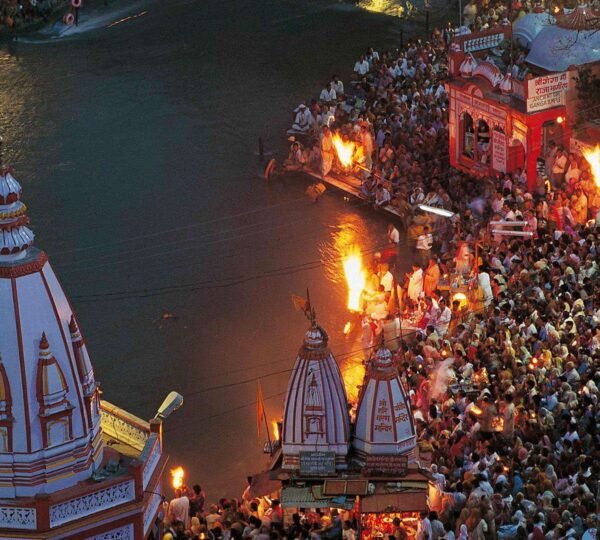
Ramghat: Ram Ghat is one of the biggest pilgrim places. It is where millions of pilgrims gather during the event. The aarti here is renowned and the ghat is known to be the oldest bathing ghat in Ujjain, almost as old as the Kumbh mela itself.
Harsiddhi temple is one of the 52 Siddhapeeth's. The Marathi art can be here on the two pillars decorated with lamps.
Day 03: Ujjain - Omkareshwar (04 Hrs.) – Maheshwar (1.5 Hrs)
After Breakfast, Checkout and Proceed for Omkareshwar. Visit Omkareshwar Jyotirling Temple (ONE OF THE TWELVE JYOTIRLING TEMPLE) and Mamleshwar Temple. Later do Narmada River Pooja. After Pooja and darshan transfer to Maheshwar. Check in to the Hotel and Relax. Night stay in Maheshwar.
Omkareshwar Temple: Omkareshwar means ‘Lord of Omkaara’, which is one of the Dwadasa Jyotirlinga shrines or the 12 shrines dedicated to Lord Shiva in the form of Jyotirlingam. Omkareshwar, located on the island of Mandhata, on a sacred island, shaped like the holy Hindu symbol ’ Om’ drawing hundreds of pilgrims to this temple town.
Mamleshwar Temple : The Mamleshwar temple, hosts the second Jyotirling of Omkareshwar, and one of the only twelve on the Indian subcontinent.
Day 04 – Maheshwar Sightseeing - Mandu (01 Hr)
After Breakfast, Checkout and Proceed to visit Maheshwar Ahilya Fort, Ahilya Mata's Cenotaph, Baneshwar Mahadev Temple, Rajarajeshwari Temple, Ek Mukhi Datta Temple, etc. Later enjoy boating at Narmada Ghat. Maheshwar is very famous for Maheshwari Handloom handmade Sarees. Guests can buy from Maheshwar local market. Evening Enjoy Boating (ON DIRECT PAYMENT BASIS) and visit Narmada River aarti at Royal Ghat. Later transfer to Mandu. Check in to the Hotel and relax. Night stay in Mandu.
Maheshwar is a town, the commercial capital of the state. The Town lies on the north bank of the Narmada River. It was the kingdom of Chaktavartin Samrat Sahastraarjun, Kartavirya Arjuna a Heheya king. Lately, after many years, it was the capital of the Malwa during the Maratha Holkar reign till 6 January 1818, when the capital was shifted to Indore by Malhar Rao Holkar III.
Maheshwari Sarees & Handlooms: Maheshwar is very famous for Maheshwari Handloom handmade Sarees. Guest can buy from Maheshwar local market.
These Sarees were first found and produced in the town of Maheshwar. Hence these sarees named Maheshwari Sarees. The interesting legend behind these suits is of Queen Ahilyabai Holkar who ordered various craftsmen and artisans from Malwa and Surat to design a special suit with 9 yards. Which later came to be known as the Maheshwari suit.
Day 05: Mandu Sightseeing – Indore (2.5 Hrs.)
After Breakfast, Checkout and proceed to visit Rani Roopmati’s Pavilion, Hoshang’s Tomb, Echo Point, Jama Masjid, Jahaj Mahal, Hindola Mahal & Neelkanth Temple. Later transfer to Indore. Check in to the Hotel and Relax. Night stay in Indore.
Tip: Guide recommended at MANDU
The Roopmati Pavilion was built by Baz Bahadur for his beloved Rani Roopmati.
From one side early in the morning around sunrise she could see Maa Narmada and from other side she could see Rewa Kund.
Hoshang tomb is a fine example of Afghan-style architecture. It is said that four architects from Shah Jahan's court visited Mandu and took inspiration for the Taj Mahal.
ECHO Point If you speak in a loud voice while facing Dai's palace in front of the Sagar Talab, you will hear the echo of your words This is due to the amazing construction of the edifice: many such structures were constructed in such a manner that anything spoken here could travel as far as 35 km up to Dhar. This was a small example of the highly developed acoustic system of the time.
Jahaj Mahal One reason for building the Jahaj Mahal retreat was to provide transit accommodation as a Sarai or (inn) to the large number of pilgrims from Afghanistan, Arabia, Iran, Iraq, Morocco and Turkey who came to Delhi to visit the many Muslim shrines. Another version is that it was built as a retreat for the emperors, Akbar Shah II and Bahadur Shah II and their families, during the summer months, away from the heat and dust of Delhi. Its construction is dated between 1451 AD and 1526 AD, before Babar's invasion and the beginning of Mughal rule in Delhi. The palace is approached from the eastern side. A courtyard, originally in a rectangular shape now seen in ‘U’ shape, is in the center of the palace. The palace has carved impressive square chhatris (six of them with different numbers of pillars – six, eight and twelve) or towers in the corners and the centre, ornamented with beautiful squinches in different chambers and walls (pictures in the gallery). The domed pavilion over the central gate is decorated with blue tiles. A small mosque is also located within the palace, as discerned from a mihrab in a niche on the west wall.
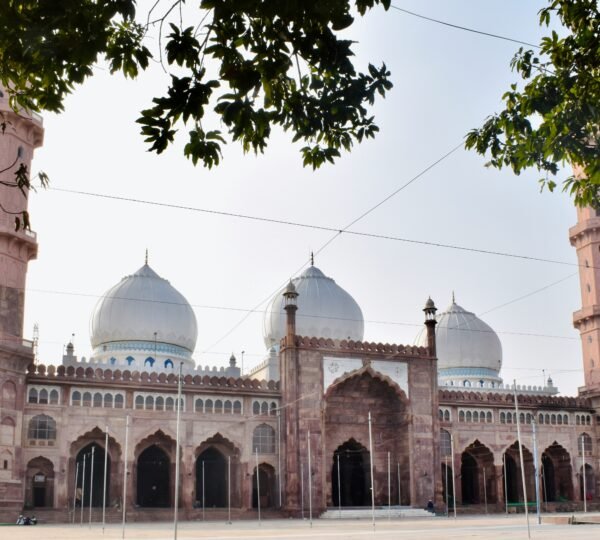
Jama Masjid (also called Jami Masjid) is a historic mosque. Built in Mughal style of architecture, the mosque has been believed to have been built during the reign of Hoshang Shah and completed during the reign of Mahmud Khilji in 1454.
Nilkanth Temple (the heart-pleasing abode) is a Mughal architecture temple built on the orders of Mughal Emperor Akbar by the governor of Mandu, Shah Badgah in 1574 AD. Akbar commissioned this temple for his favourite wife, Empress Mariam-uz-Zamani, who was a follower of Hinduism.
Day 06 – Indore Departure
After breakfast, Checkout and Proceed to Indore Airport for your onward Journey.